
Why Be Courageous?

1. Is Courage Rational?
From a certain decision-theoretic perspective, courage is irrational. Consider any collective action problem. Typically, these situations require a significant number of cooperators for the effort to be successful. But in many cases, either the number has been reached or it has not. Unless the number of cooperators is N-1, where N is the critical number and your joining the effort will make the difference, it seems rational to sit on the sidelines. If the number is N or above, the effort will succeed anyway, without your participation. Why join in then, and pay the cost of cooperation? Might as well sit back. If the number is N-2 and below, the effort is going to fail anyway. Depending on the case, failure can be extra costly. So in that case again, might as well sit back and see what happens.
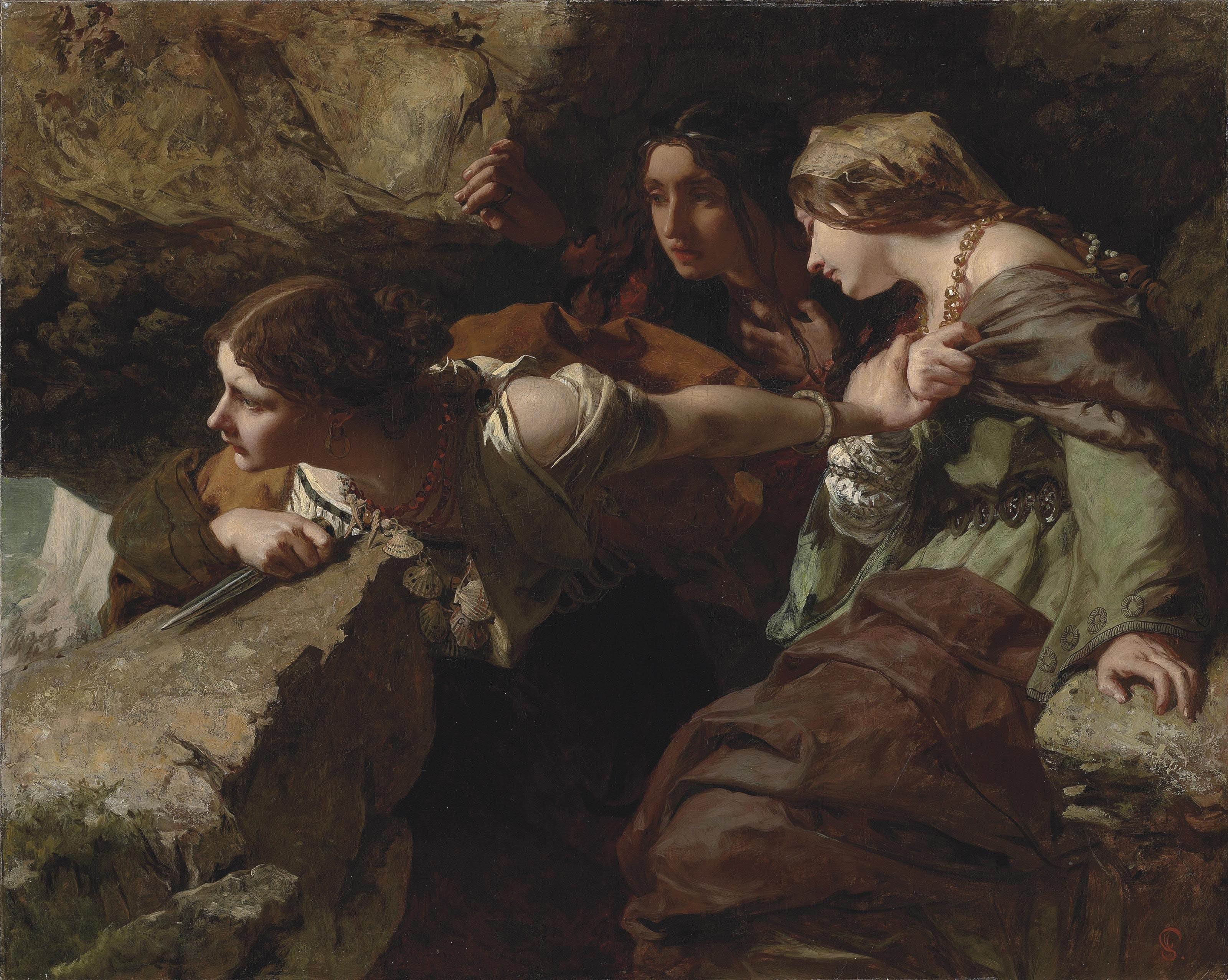
Imagine you are on a 19th century train and 5 robbers have boarded it. Suppose it will take 10 people to come together to resist them. If 9 people look like they’re going to resist, then it makes sense for you to pitch in. A successful repulsion of the attack is better for you than the robbery succeeding. But if, say, 15 people have volunteered, why risk injury or worse? And if only 3 people are going to stand up, it’s going to be a failed effort and the robbers’ response could be brutal. The cost-benefit analysis seems to give a clear verdict—stay back.
Courageous action, in such cases, requires a leap of faith and a willingness to do one’s part. William James thus writes in his Will to Believe:
A whole train of passengers (individually brave enough) will be looted by a few highwaymen, simply because the latter can count on one another, while each passenger fears that if he makes a movement of resistance, he will be shot before any one else backs him up. If we believed that the whole car-full would rise at once with us, we should each severally rise, and train-robbing would never even be attempted. There are, then, cases where a fact cannot come at all unless a preliminary faith exists in its coming. And where faith in a fact can help create the fact, that would be an insane logic which should say that faith running ahead of scientific evidence is the ‘lowest kind of immorality’ into which a thinking being can fall.
Do beliefs that require a “leap of faith” count as rational? On a standard picture, they do not. Beliefs are rational when they are based on the evidence, not on faith. This is what W.K. Clifford argued, and what James is responding to in the passage above.
2. Intellectual Courage
The classic examples of courage in the history of philosophy involve going to (literal) war. Aristotle thus focuses on facing death in battle as the paradigm expression of courage.
But if the pen is mightier than the sword, then another form of courage deserves our attention: intellectual courage. Ideas matter and they shape the world in the long run more than we realize. Thus, the economist John Maynard Keynes once wrote:
the ideas of economists and political philosophers, both when they are right and when they are wrong, are more powerful than is commonly understood. Indeed the world is ruled by little else. Practical men, who believe themselves to be quite exempt from any intellectual influences, are usually the slaves of some defunct economist. Madmen in authority, who hear voices in the air, are distilling their frenzy from some academic scribbler of a few years back. I am sure that the power of vested interests is vastly exaggerated compared with the gradual encroachment of ideas.
In the clash of ideas, the relevant virtue is intellectual courage. Following Aristotle, if virtues are golden means between two vices of excess, then intellectual courage will be the proper mean between conformity on the one end, and perhaps rashness or contrarianism on the other end. The intellectually courageous person will follow the argument where it leads, rather than letting the opinions of peers or powerful people dictate the conclusion.
On the other hand, such a person would not be a mere contrarian, dissenting from popular opinion for its own sake. There are two reasons for this:
First, sometimes the popular opinion is just correct. It has the best evidence and arguments for its side.
Second, the contrarian is letting the world decide her opinion for her, just in the other direction. She too is intellectually unfree in a sense.
The intellectually courageous person will not be rash either. Sometimes it is wise to “keep the powder dry.” And in any productive conversation, we must meet our interlocutors where they are. Persuasion works, but going straight from 0 to 100 rarely does.
3. The Pitfalls of Conformity
The pressure to conform can be intense, especially in settings of tribal conflict. We form many of our beliefs to navigate the world around us. Beliefs about the nearest watering hole or barber shop are good examples. But beliefs can also signal our group loyalties. Groups can then differentially award status and other benefits based on whether they perceive the person as being on “their side.”
The philosopher Dan Williams explains:
beliefs also serve social functions. We embrace beliefs that make us look good, signal our socially desirable traits, and advertise our loyalties and allegiances. Just as clothing is chosen for its signalling value, the beliefs that serve these social functions are selected to manage social impressions.
The kicker is that this process is not conscious. It is not as if we consciously decide to believe something that will help us fit in to the tribe. Rather, motivated reasoning works in subtle ways, behind the scenes. We can engage in motivated reasoning by:
Oversampling sources of information that confirm the beliefs of our tribe.
Biased memory search, where we selectively scan our memories for confirming evidence.
Interpreting ambiguous evidence in the belief’s favor.
Biased selection of statistical heuristics: in cases where multiple heuristics are available, we can use those which further confirm our beliefs.
Selective application of scrutiny: we can scrutinize arguments whose conclusions we disagree with more thoroughly, giving sloppy arguments in our favor a pass.
All this can occur under an illusion of objectivity. Ziva Kunda explains:
people motivated to arrive at a particular conclusion attempt to be rational and to construct a justification of their desired conclusion that would persuade a dispassionate observer. They draw the desired conclusion only if they can muster up the evidence necessary to support it...In other words, they maintain an “illusion of objectivity.”
I have argued here that the pressure to conform to false beliefs is especially strong when:
Our social and professional circles are on the lookout for beliefs that signal loyalty to the coalition.
The costs of having a false belief are externalized: this is true of most social and political beliefs. (For example, being wrong about the causes of crime, say, externalizes the cost of rising crime onto others—it’s not as if one’s vote is going to directly affect one’s own life very much. This is similar in structure to other collective action problems like climate change: the costs of being wrong are distributed across the whole world. The benefits of having a socially accepted belief, though, are concentrated on the individual.)
The belief in question is not easily falsifiable. Given the “rationalization constraint” that Kunda identifies, it is difficult to form a belief like 2+2=7. But false beliefs about the impacts of immigration policy, trade, policing, etc., are not easily falsifiable in this way. That makes them ripe for motivated reasoning.
All this leads to a collective action problem. To the extent that our view of the world is settled by such processes, it is likely to be inaccurate. And if we act on that view and make policies based on it, they are likely to backfire, causing unanticipated harms. I explore this in detail in my book, Why It’s OK to Speak Your Mind (which, despite the title, defends a duty, not just a permission).
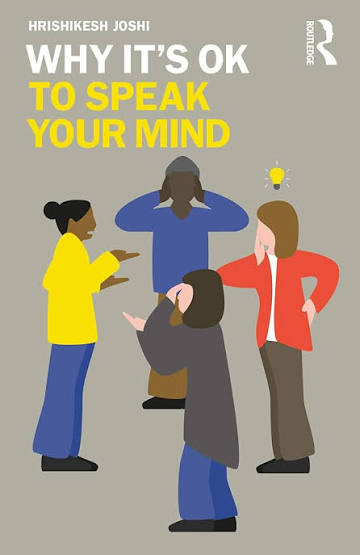
(Shameless plug: Why It’s OK to Speak Your Mind (2021), Routledge Press)
In general, we have tendencies for conformity bias (believing what our peers believe) and prestige bias (believing what the high-status people in our community believe).
Why do we have these tendencies? Evolutionary psychologists note that in our ancestral environment, ostracism meant near-certain death. If you were kicked out of the tribe in our ancestral environment, the chances of your leaving surviving offspring would drop dramatically. As an ultra-social species, then, we are keenly sensitive to cues of potential ostracism and want to avoid it as much as possible.
4. The Good News
One piece of good news is that we don’t live in our ancestral environment. Being ostracized from a particular community nowadays doesn’t lead to death, at least typically. Of course, it hurts. But it’s not the end of the world. As Matt Burgess puts it, your speech is freer than you think.
Intellectual courage is thus like reverse sugar. Why do we enjoy sugary foods so much? The natural explanation is that sugar is calorie rich and it would have helped our survival in our ancestral setting, where calories were scarce. Now that calories are not scarce, though, we still enjoy sugar, leading to an evolutionary mismatch.
Intellectual courage is the opposite: while speaking our minds on tribally salient beliefs would have been extremely dangerous in the evolutionary setting, the material costs of doing so are much lower now. Of course, there is still the psychological cost, but that’s why the word ‘courage’ is fitting in the first place—if there is no potential cost, then there is no courage.
5. Good News for Graduate Students and Junior Academics
As it stands, the university system is a politically homogenous place. And there is good evidence that the homogeneity results at least in part from hiring discrimination and a hostile climate. (Apart from being unjust to those discriminated against, this status quo is also bad for our collective epistemic position and potentially undermines democratic legitimacy.)
This is not new; it’s been a pattern for decades. Even Robert Nozick faced hostility in the late 60s/early 70s. He explains in his last interview:
RN: Ah, that’s different. The Harvard graduate students of the late 60s and early 70s were the center of SDS activity on campus. I had been here for two years as an assistant professor, and left and went to Rockefeller University for two years, and came back in 1969 when I was 30 years old as a full professor. In the previous semester, students had taken over the university’s main administration building; their occupation was ended by police action. Feelings ran high. I announced a course, and it was printed in the catalog, titled “Capitalism,” in the philosophy department. The course description was “a moral examination of capitalism.”
JS: I see. I imagine the students expected something very different from what they got.
RN: That’s right. Somehow a rumor had spread, or maybe they saw what books were there in the textbook section of the bookstore, where in addition to something by Marx and some socialist book were Hayek and Mises and Friedman. So one graduate student came up to me at the beginning of the term and said, “We don’t know if you’re going to be able to give this course.” This was a graduate student in philosophy. And I said, “What do you mean?” He said: “Well, you’re going to be saying things…” and he mumbled something, “there may be interruptions or demonstrations in class.” And I said -- I was then, you have to remember, 30 years old -- I said, “If you disrupt my course, I’m going to kick the shit out of you.” He said, “You’re taking this very personally!”
Now Nozick, as a full professor at Harvard (where does one move up to from there?), had the requisite fortitude.
But graduate students with heterodox views (heterodox w/r/t the academy, even if widespread among the public) see the writing on the wall and self-censor. Junior academics self-censor until they get tenure. Even after tenure, many would rather not rock the boat. Besides the wealth of data on this phenomenon, I have also personally observed it across the country. Over dinner or drinks at a conference, graduate students or faculty will privately reveal they disagree with the dominant view on some topic but they don’t want to express that publicly.
I recently gave a talk version of this blog post on academic freedom to a PPEL (Philosophy, Politics, Economics, and Law) summer school program for undergraduates from different colleges in the U.S. and Canada. Several of the students came up to me afterwards, expressing their own challenges in openly sharing their ideas. “What do you recommend for someone who is just starting out in their career?” was a common concern. Students want to express their views, but feel like they have to keep their head down lest they risk their careers, for which they have worked very hard.
All this is an open secret. The philosopher Sam Berstler, in her recent article in The Philosophical Review, explains:
open secrecy norms are structurally different from other everyday non-acknowledgment norms. Open secrecy norms iterate: when p is an open secret, then there’s a norm not to acknowledge that p, and this norm is itself an open secret.
Applied to our case, despite the widespread pattern of hiring discrimination on ideological grounds, there is a norm not to acknowledge this. And the norm itself is an open secret.
When prompted, over beers, say, about why some candidate hasn’t gotten a job despite an excellent CV, faculty might say things like: “well, he/she has expressed some controversial (read: conservative or libertarian or mainstream among the public…) views.” I have heard something like this from several faculty at various institutions. But the prompt matters. If the question is asked: “is there ideological discrimination in the academy?” many will either deny it or soften their stance: “it’s there in some places, but I don’t think it’s a huge problem.” That’s the open secrecy norm at work.
Wait, but where’s the good news?
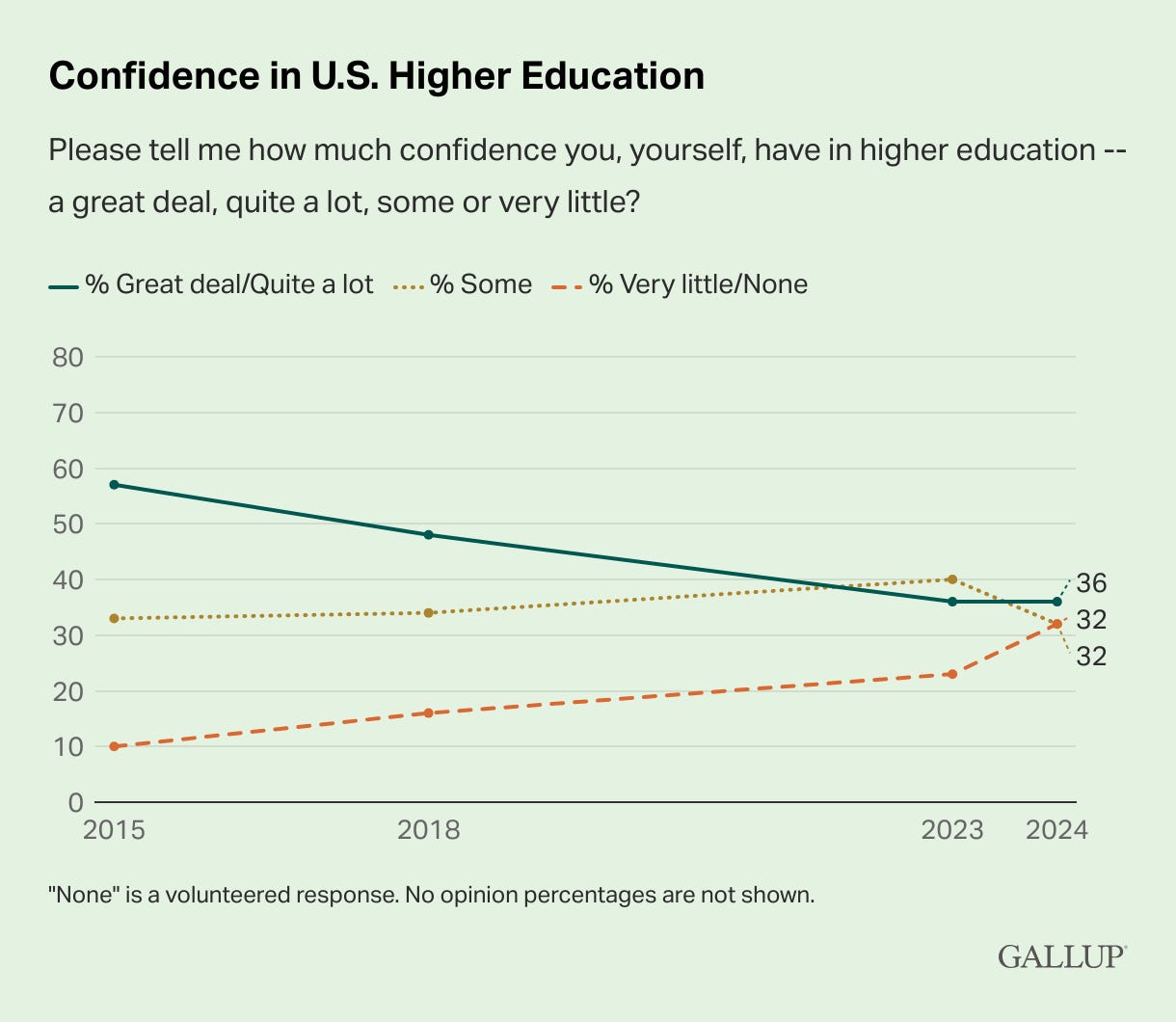
The good news is that the tides are turning. Faced with collapsing trust in institutions of higher education (see below), centers for “Civic Education” or “Intellectual Pluralism” are popping up across the country. One example is the Hamilton School for Classical and Civic Education at the University of Florida. Similar initiatives have been started in many states including Ohio, West Virginia, Colorado, Iowa, and South Carolina. (Some people are not happy, but so it goes.)
But these centers face an enormous pipeline problem. There is now the will and the funding to hire individuals with research programs that depart from the ideological monoculture in areas like philosophy, sociology, history, and so on. But because many good candidates have either kept their heads down to work on “safe” topics or have left the academy altogether, there is now a real shortage.
Let me be blunt here. I want to express the open secret as clearly as possible. As a graduate student, if you publicly dissent from the orthodoxy, you will absolutely be discriminated against when it comes to jobs at the majority of traditional departments. People with poorer CVs, worse teaching portfolios, and less well-developed research programs will get chosen over you. It will hurt.
But you don’t need every department to hire you: you just need one. And if there are 10 departments or centers willing to hire people with your profile but only 5 plausible candidates, your chances are good.
6. How Graduate Students Can Prepare
The first thing is to read widely, beyond what is assigned in grad seminars. In political philosophy or PPE (which are my areas), students can explore the works of:
F.A. Hayek, Milton Friedman, and James Buchanan, if they want to hear the best case for open markets. These are economists, but they’re philosophically quite sophisticated. Hayek’s “The Use of Knowledge in Society” is an intellectually rich essay that is as much epistemology as it is economics. Friedman’s “The Relation Between Economic and Political Freedom” is hugely interesting from a small-l liberal point of view. Buchanan wrote about the “veil of ignorance” years before Rawls did. (Chris Freiman’s book Unequivocal Justice and Jason Brennan’s Why It’s OK to Want to Be Rich are also great in this vein and more recent.)
Along with Allen Buchanan, I taught a grad seminar this past spring on conservatism. I think the students got a lot out of the discussion and it made for some excellent term papers. We read Burke, Oakeshott, some Scruton, as well as some more recent work in the area (for example: Justin Tosi and Brandon Warmke have a nice chapter called “Conservative Critiques”). There are many issues to be worked out: for example, the distinction between “procedural conservatism” (which is skeptical of radical change) and “substantive conservatism” (which calls for specific institutions and policies). One question we explored was whether these approaches are in tension with each other, so that arguments supporting the former might undermine the latter and vice versa. Future work engaging with this tradition and critically evaluating the arguments on their own terms could be enormously fruitful.
There are now several social scientists on Substack and elsewhere, who offer rigorous, data-backed critiques of commonly held views in the academy: Lee Jussim, Cory Clark, Steve Stewart-Williams, Garett Jones, and Kathryn Paige Harden come to mind here. There are many others as well.
Second, network with others around the country. Your home department need not fully dictate your education. You can attend workshops and reading groups facilitated by institutions who want to discuss alternative ideas. Some possibilities:
The Institute for Humane Studies, which runs a range of (funded) events focusing on freedom and liberalism (with a historical tilt towards classical liberalism).
I got a lot out of attending the Buchanan Bootcamp several years ago, which was led by Mike Munger. We had great discussions on public choice theory, Buchanan and Tullock’s The Calculus of Consent, and the similarities and contrasts between this work and Rawls’s Theory of Justice. I presented a very early version of my critique of G.A. Cohen’s Why Not Socialism?, on which I got great feedback.
Other possibilities include: events at Mercatus, AEI, or one of the new centers such as Benson in Colorado or Chase in Ohio.
Lastly, create group chats (indeed, the salons of the 21st century) with people who share your interests. They’re excellent for creating camaraderie, bouncing ideas back and forth, and sharing news about relevant opportunities.
Political philosophy has been working within a narrow set of assumptions for a while—but there is a lot to be done outside that window and much to be re-evaluated!
7. The Real Good News(?)
What’s the point of cultivating virtue—in this case, intellectual courage? Maybe you’ll be rewarded, maybe not. Maybe virtue is its own reward, as the ancients thought. Here, Nietzsche (Zarathustra, Second Part, “On the Virtuous”) offers a different perspective:
Slack and sleeping senses must be addressed with thunder and heavenly fireworks. But the voice of beauty speaks gently: it creeps only into the most awakened souls. Gently trembled and laughed my shield today; that is the holy laughter and tremor of beauty. About you, the virtuous, my beauty laughed today. And thus its voice came to me: “They still want to be paid.”
…
Alas, that is my sorrow: they have lied reward and punishment into the foundation of things, and now also into the foundation of your souls, you who are virtuous. But like the boar’s snout, my words shall tear open the foundation of your souls: a plowshare will I be to you. All the secrets of your foundation shall come to light; and when you lie uprooted and broken in the sun, then will your lies also be separated from your truths.
For this is your truth: you are too pure for the filth of the words: revenge, punishment, reward, retribution. You love your virtue as a mother her child; but when has a mother ever wished to be paid for her love?
If Nietzsche is right, we must love our distinctive virtues as a mother loves her child. We love them because they are an expression of our authentic selves.
Developing original ideas requires expressing them. And if writing is thinking, then it requires actually putting ideas down on paper (or computer). Moreover, feedback and dialogue are key to developing our ideas, as Seana Shiffrin has argued persuasively in her book, Speech Matters.
Following Nietzsche, the point here is that if we never develop our ideas and perspectives on the world in our own authentic ways, we become stunted versions of ourselves. Genuine self-love then involves developing one’s unique perspective(s) by engaging with (good) interlocutors. Courage is indispensable for this.
As John Stuart Mill puts it in On Liberty, Chapter 3:
Human nature is not a machine to be built after a model, and set to do exactly the work prescribed for it, but a tree, which requires to grow and develop itself on all sides, according to the tendency of the inward forces which make it a living thing.
We are social beings, but we are also rational beings, as Aristotle emphasized. To give up on intellectual courage then is, especially for a certain kind of person, to give up on oneself.
Now, is this the way to get a fancy job at Yale or Harvard? Probably not. But those grapes, if they are bought at the cost of one’s integrity and self-expression, are sour anyway.
8. Persistence Pays Off
History is replete with examples of individuals succeeding against the odds. Surely there is an element of survivorship bias here. But the examples (you can take your pick) are inspiring. Most successful writers, entrepreneurs, or generals failed many times before they succeeded—their persistence was the key.
Benjamin Franklin once said, “Energy and persistence conquer all things.” Even when things look bleak, continuing on one’s path can bring unanticipated opportunities and new avenues for growth. This requires a leap of faith. But so do many good things in life.
A final quote from Nietzsche in this vein:
When a human being resists his whole age and stops it at the gate to demand an accounting, this must have influence. Whether that is what he desires is immaterial; that he can do it is what matters. (GS 156)
Onwards!
I'm encouraged by civics centers, but one thing really confuses me: Why do they hardly ever hire junior philosophers? I can count on my hand the number of them working at these centers.
I think this was strong as an exposition of the rationality of virtue and other leap of faith beliefs. However, the virtue you ultimately advocate - intellectual courage - is importantly unlike other virtues in that it's not committed to any philosophical conception, including virtue ethics. This introduces a subtle irony; you are appealing to a conception, some kind of virtue ethics, which rests upon discursively inscrutable assumptions, in the hopes that more honest discourse, which is incapable of validating inscrutable assumptions and thus tends to subvert them, will lead to positive ends. People likely need to be tribal about something, and honest philosophical discourse, being fundamentally opposed to tribalism, is not a sufficient banner to rally under - unless it can, as in the hard sciences, clearly demonstrate material benefits. But of course, it can't do this.